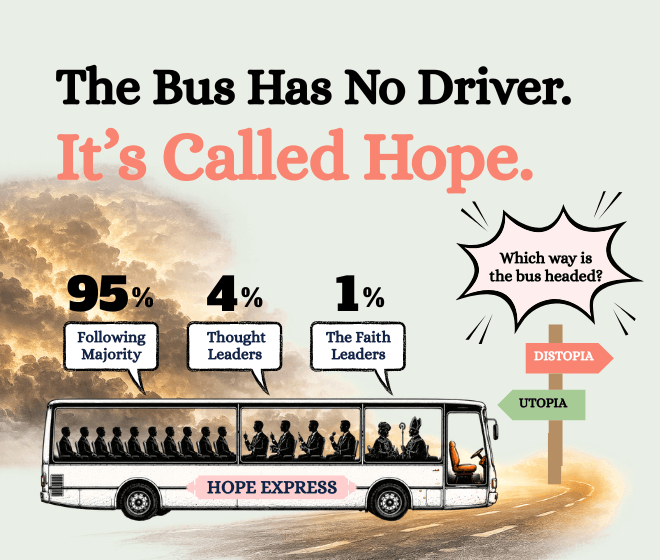
95% of people are following. 4% are performing leadership. 1% believe they know the destination. The problem is the 1% disagree with each other.
“Hope for the best.” That phrase gets said to people at their lowest points as if it contains actual instruction. It doesn’t. It’s the verbal equivalent of a shrug dressed up as comfort. And yet it persists, because the alternative is too uncomfortable to sit with in polite conversation: admitting that nobody has a credible map to where humanity is going.
So let’s sit with it here.
The Three Groups Nobody Talks About Honestly
Walk into any room and the distribution is roughly this:
95% are followers. Not a criticism. A description. Most people are navigating their own lives, their families, their immediate survival. They are not asking where humanity is headed. They are asking whether they can afford next month’s rent, whether their kids are okay, whether they will have a job in two years. Utopia is not on their agenda because it cannot be. The bandwidth isn’t there.
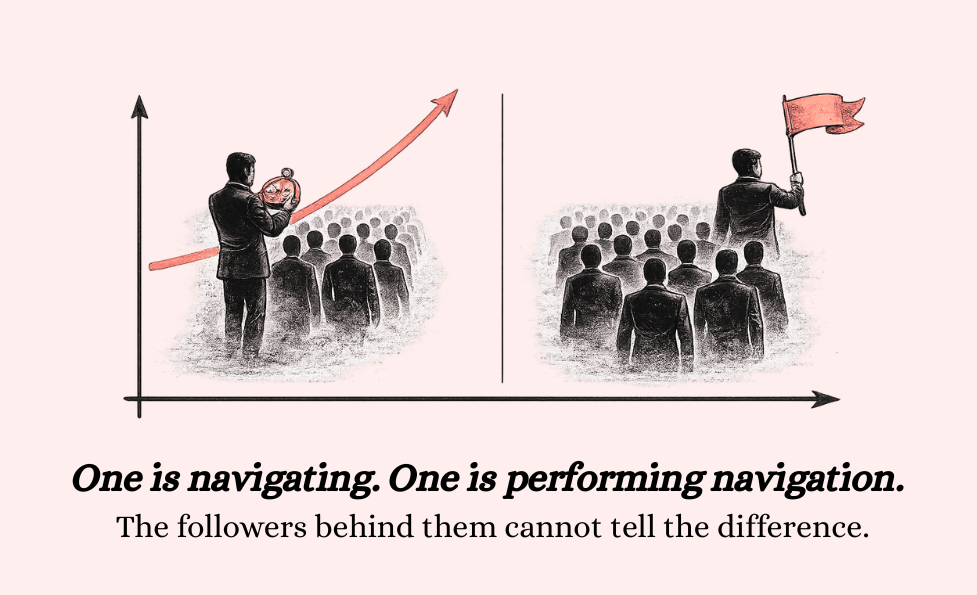
4% are performing certainty. These are the thought leaders, the LinkedIn philosophers, the TED Talk circuit, the podcast hosts who have found a frame that works and repeat it until the frame becomes their identity. They sound like they have figured something out. Most of them have figured out how to sound like they have figured something out. There is a difference, and the audience rarely gets to see it.
1% are faith leaders. Across every tradition and ideology, a small group of people genuinely believe they carry the map. The religious leader who believes the destination is divine and the path is scripture. The secular utopian who believes the destination is rational and the path is systems design. The revolutionary who believes the destination is justice and the path is restructuring power. They disagree with each other on every specific. They agree that they are the ones who know.
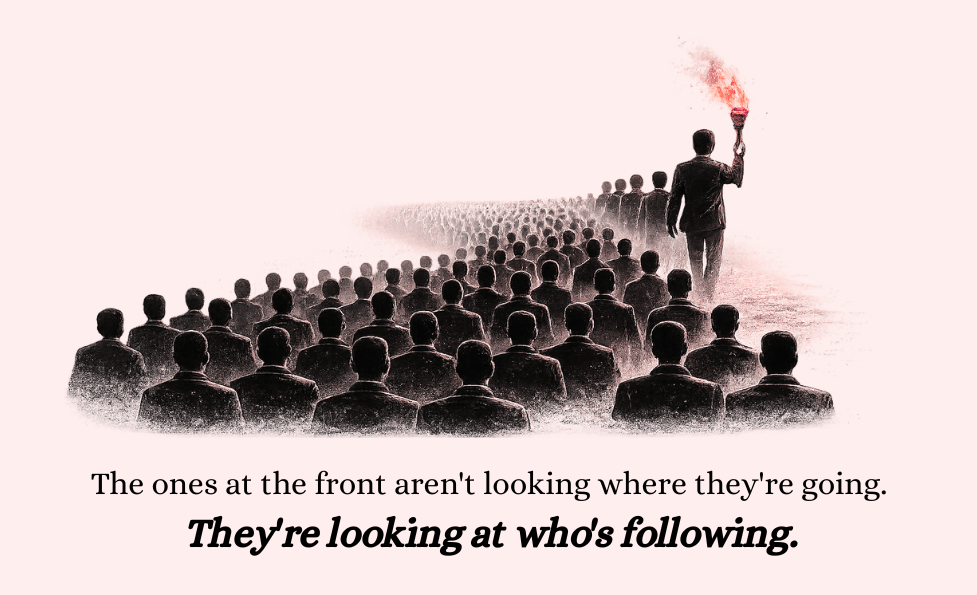
The problem is structural. The 95% need a direction from someone. The 4% provide the appearance of direction without the substance. The 1% provide genuine conviction, but their convictions contradict each other, and each group within the 1% believes the others are not just wrong but dangerous.
What Hope Actually Does
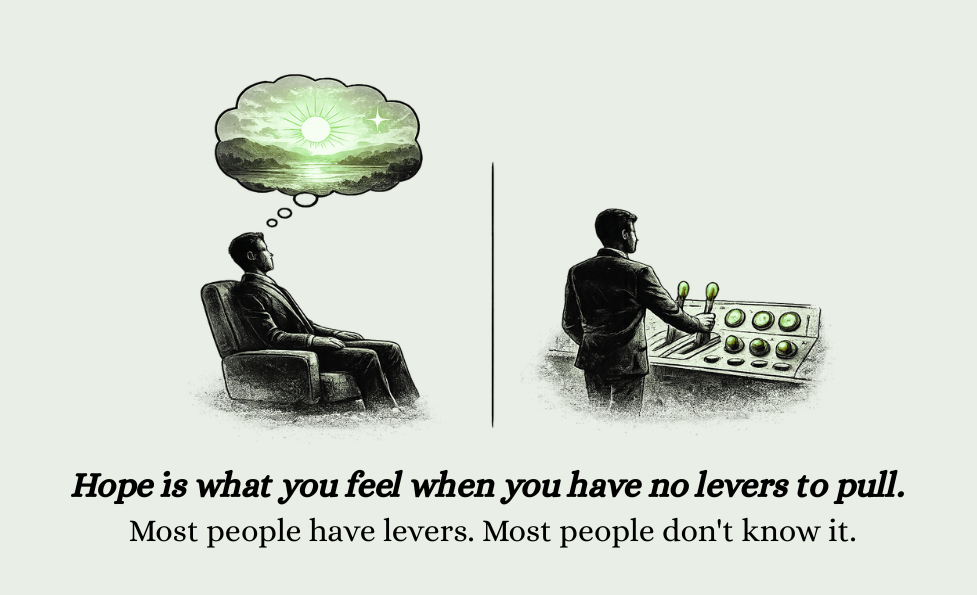
Hope is not a navigation system. It is an analgesic.
When someone tells a person in pain to “hope for the best,” they are not providing direction. They are reducing the pain of not having one. The function of hope, in most of its social uses, is to keep people moving without asking where they are moving to. A sedated population is easier to manage than an anxious one, and hope is the most socially acceptable sedative available.
This is not a conspiracy. It is an emergent property of how large groups of people handle collective uncertainty. The alternative to hope, in the absence of a credible destination, is panic. Most social systems, religious, political, corporate, choose hope over panic because panic is expensive and contagious.
The Stoics had a more honest position. Marcus Aurelius, running an empire of roughly 70 million people across the second century AD, wrote extensively about the difference between hoping for outcomes and controlling the inputs that produced them. His Meditations, written as private notes, not public philosophy, contains almost no instructions to hope. It contains extensive instructions to act precisely, within the domain you can actually influence, and release everything else. He was managing the largest administrative system in the Western world at the time, and his working philosophy was the opposite of “hope for the best.”
The reason Meditations still sells is that the alternative to hope it proposes is harder and less comfortable: precise, bounded, unsentimental action. People buy the book. Most do not adopt the practice.
The Utopia Problem
Every serious attempt to build a society that looks like Utopia has run into the same problem: the people designing it disagree about what happiness means.
Thomas More, who coined the word Utopia in 1516, was describing a place where property was communal, gold was used for chamber pots and prisoner chains to strip it of value, and citizens worked six hours a day. He was also describing a place with slaves, a place where adultery was punishable by servitude, and a place where unauthorized travel required a passport. His Utopia solved some problems and embedded others so deeply into the structure that they were invisible to him.
Every Utopia since has done the same thing. The Soviet experiment was explicitly framed as the construction of a new human society, a classless state, peace through equality. It produced a system in which 1.7 million people died in the Gulag between 1930 and 1953. The designers were not lying about the destination. They were wrong about the path, and then too committed to the path to course-correct when the evidence came in.
The Scandinavian welfare states, which most contemporary Utopian thinking points to as the closest functional approximation, run on tax rates between 45% and 57%, produce high social trust scores, low inequality, and high self-reported wellbeing. They also require a cultural and demographic homogeneity that has proven difficult to maintain as immigration increased, and they are not replicable without the specific institutional history, resource base, and starting conditions that produced them. Norway’s sovereign wealth fund, currently holding over $1.7 trillion in assets, was seeded by North Sea oil discovered in 1969. The Utopia runs partly on fossil fuel revenues.
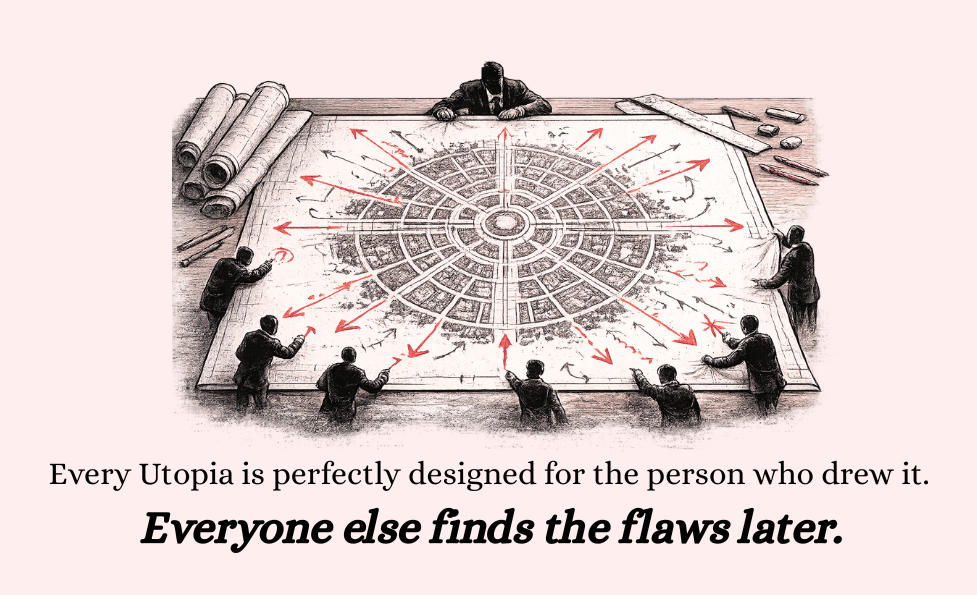
The honest reading of Utopian attempts is not that they were cynical. It is that the humans designing them could not see past their own blind spots. Every design encodes the values of its designers. The designers always have blind spots. The people living inside the design discover the blind spots over time, often at cost.
Are We Moving in the Right Direction
The question deserves a direct answer rather than a philosophical hedge.
On measurable dimensions of human welfare, yes. In 1820, roughly 90% of the global population lived in extreme poverty, defined as less than $2.15 per day in today’s purchasing power. In 2019, before the COVID disruption, that figure was 8.5%. Child mortality in 1800 was approximately 43% globally. In 2021 it was 3.8%. Average life expectancy in 1900 was 32 years. In 2021 it was 71. These are not small movements. They represent sustained improvements across two centuries of messy, contradictory human decision-making.
On dimensions that are harder to measure, the picture is less clear. Reported loneliness in the United States has doubled since the 1980s. In 2023, the US Surgeon General declared loneliness a public health epidemic, estimating its health impact as equivalent to smoking 15 cigarettes per day. Social trust, measured by the World Values Survey, has declined in most Western democracies since the 1990s. The percentage of Americans reporting no close friends rose from 3% in 1990 to 12% in 2021.
So: materially better, socially worse, and the two trends are not unrelated. The economic systems that produced the material improvements also produced the social fragmentation. The technology that connects 5.4 billion people to the internet has measurably increased the reported experience of isolation in teenagers, with rates of depression and anxiety in US adolescents rising 52% between 2005 and 2017 according to a study published in Psychological Medicine.
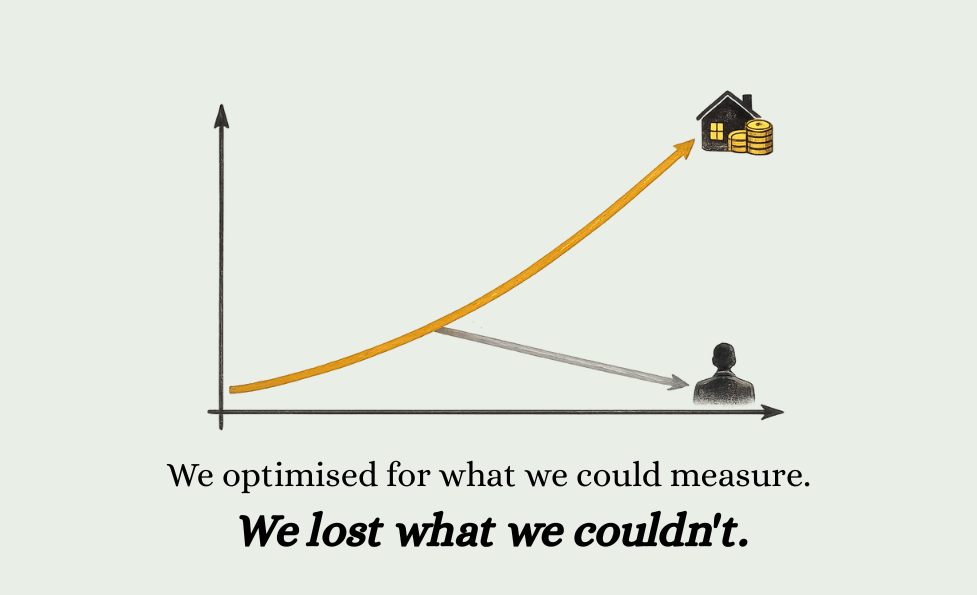
The direction is not simply good or bad. It is better in the dimensions we optimised for and worse in the dimensions we did not notice we were sacrificing.
The 1% Problem
The faith leaders carry the most weight in this structure, and they are the most dangerous variable.
When a faith leader is right about the destination and the path, the results are compounding. The abolition movement was led by a small group of people, predominantly Quakers in the 1780s, who held a conviction about human dignity that was not shared by the majority and was actively opposed by significant economic interests. William Wilberforce spent 26 years in the British Parliament arguing for abolition before the Slave Trade Act passed in 1807. The 1% in that case were right, and their conviction over decades changed a foundational structure of global commerce.
When a faith leader is wrong about the destination, or right about the destination but wrong about the path, the results compound in the other direction. Jim Jones moved 918 followers to Jonestown, Guyana in 1977, promising a socialist paradise free from American racism and capitalism. On November 18, 1978, 909 of them were dead. Jones had a destination. He had conviction. He had followers who trusted the conviction because it was expressed with certainty. He was catastrophically wrong about the path.
The mechanism that separates Wilberforce from Jones is not charisma, not intelligence, and not sincerity. Both were sincere. Both were intelligent. Both were charismatic. The difference was accountability to evidence, the willingness to test the path against observable results and change it when the results contradicted the theory.
Wilberforce changed his tactics repeatedly over 26 years. He built coalitions, shifted arguments, found new legal angles when old ones failed. Jones built a closed system that interpreted any contradiction as external persecution. One updated. One didn’t.
What Keeps Humanity Moving
It is not hope. Hope is the feeling. What actually moves humanity is a smaller number of people who hold a direction with enough conviction to act on it, combined with enough accountability to correct course when the path produces evidence that they are wrong.
The 95% do not need to know the destination. They need the systems they live inside to be designed by people who are updating their maps based on evidence rather than defending the maps they started with.
The 4% are largely noise. The thought leader circuit produces very little that changes the trajectory of anything. A TED Talk watched by 10 million people and a book that sells 500,000 copies change how people talk about a problem. They rarely change the institutional structures that produce it.
The 1% matter disproportionately, and the variable that determines whether they matter in a useful direction is whether they have a feedback mechanism between their conviction and observable reality. Every faith, political, and ideological system that has produced sustained positive change over long time horizons has had some mechanism for testing its assumptions against the world. Every system that has produced sustained harm has had a mechanism for insulating its assumptions from the world.
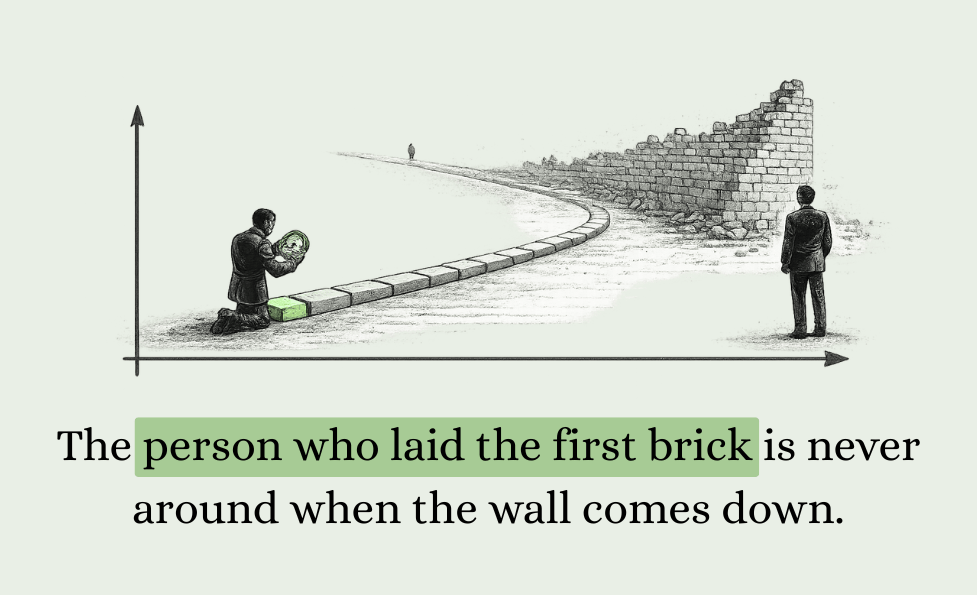
The question for humanity at this moment is not whether we are going in the right direction. We are going in several directions simultaneously, most of them shaped by people who are not accountable to the outcomes they produce. The CEO whose quarterly decisions compound into a twenty-year health crisis in a product category will have left the company before the crisis becomes visible. The politician whose infrastructure decisions produce a water crisis fifteen years later will have left office before the first lead test. The faith leader whose theology produces multigenerational shame in its followers will not be alive when those followers reach the therapist’s office.
The gap between decision and consequence is where hope lives, because hope fills the space where accountability should be.
The Utopia the 1% are trying to guide humanity toward requires the 4% to stop performing certainty and start admitting the limits of their maps. It requires the 95% to demand accountability from the people holding the compass, not just the ones who speak with the most confidence.
Those two things have never happened simultaneously at scale. Whether they can is the only question that matters, and nobody is currently incentivised to find out.
This essay is part of an ongoing series exploring mind, memory, and what it means to be human. Read more at jagsirsmiles.com/blog
If you’d like me to create more such content, connect with me and let’s brainstorm:
LinkedIn 👉 https://www.linkedin.com/in/jagsirsmiles/
X (Twitter) 👉 https://x.com/jagsirsmiles
About Author